
 Deutsch
 Eesti
 Nederlands
 Norsk
 Svenska
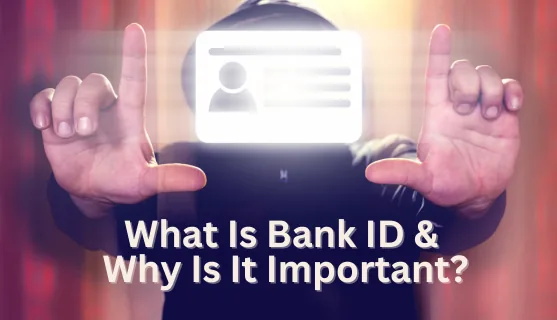
BankID is the electronic ID used in Sweden and Norway to prove who you are online, log in to banks and public portals, and sign documents with legally binding digital signatures. Each country runs its own separate system: Finansiell ID-Teknik BID AB, a consortium of Swedish banks, in Sweden, and Stø AS, owned by banks operating in Norway, in Norway.
At a Pay N Play casino, BankID works in three steps:
- You start a deposit and confirm it in the BankID app.
- Your bank authenticates you.
- Trustly or Zimpler sends your verified name, address, date of birth and ID number to the casino. There is no form and nothing to upload.
To compare sites, start with our best no account casinos or the BankID casino list.
Introduction: What Is BankID and Why It Matters
BankID is a personal e-ID issued through your bank. You use it for two things: logging in, where it proves you are who you say you are, and signing, where it puts your legally binding name on a document or transaction.
The signing part carries more weight than most people expect. A BankID signature is legally binding under EU/EEA law and is treated as equivalent to a handwritten wet-ink signature on paper. A contract signed in an app holds the same standing as one signed at a desk.
That same bank-verified identity is what lets a Pay N Play casino skip the sign-up form. If you are weighing BankID against Trustly or Zimpler, see how the payment methods compare.
Swedish vs Norwegian Systems: Architecture and Governance
Swedish BankID and Norwegian BankID share a name and nothing else that matters to you. They are two separate systems, run by different companies on different national banking infrastructure, and they do not work with each other. A Swedish BankID will not log you in on a Norwegian site, and a Norwegian one will not work in Sweden.
This matters when you pick a Pay N Play casino. A site that accepts "BankID" usually means one country's version, so check which one before you deposit.
| Swedish BankID | Norwegian BankID | |
|---|---|---|
| Operator | Finansiell ID-Teknik BID AB | Stø AS (formerly BankID BankAxept AS) |
| Owners | Consortium of Swedish banks: Danske Bank, Handelsbanken, Ikano Bank, Länsförsäkringar Bank, Nordea, SEB, Skandiabanken, Swedbank | Banks operating in Norway |
| Active users | Over 8.5 million (Mobile BankID) | Over 4.2 million |
| Reach | More than 99% of Swedish residents aged 18 to 67 | Domestic banks and public portals via ID-porten |
| Where the private key lives | On your device: the BankID app's secure storage, or encrypted files or smart cards on a PC | Central hardware security infrastructure at Stø AS |
| Works in the other country | No | No |
Who runs each system. Sweden's BankID belongs to its banks through Finansiell ID-Teknik BID AB. Norway's history has more moving parts. It launched in 2004, was split from Vipps in July 2022 into BankID BankAxept AS, and was renamed Stø AS in May 2025. Stø AS is the only authorised issuer, owned by the banks operating in Norway.
Client-side vs server-side keys. The bigger difference is technical. In Sweden, your private key stays on your phone or computer, so signing happens on hardware you hold. In Norway, the key is generated and stored in Stø AS's central infrastructure, and your device asks that infrastructure to sign for you.
Each design has a trade-off. A client-side key means losing your phone leaves you without your BankID until you reissue it. A central key means you depend on Stø AS's infrastructure being available. Neither is a reason on its own to prefer one casino over another. Whether a site handles your data well is a separate question, covered in Are No Account Casinos Safe?
Formats and Security: Apps, Cards, and eIDAS Levels
BankID comes in three formats, and for a Pay N Play deposit you will almost always use the first one. The Swedish eID framework lists them as Mobile BankID (an app on your phone or tablet), BankID on file (software installed on a desktop PC) and BankID on card (a smart card used with a physical card reader).
Mobile BankID is the one casinos are built around. You scan a code or tap a prompt on your phone, confirm, and the site gets your identity. BankID on file and on card still exist, but they tie you to one computer. They are less practical if you deposit from a laptop one evening and your phone the next.
Norway has narrowed its options further. The old SIM-based system, BankID på mobil, was fully phased out as of 2025, and the standalone BankID app replaced it. If an older guide tells you to use your SIM card to log in to a Norwegian site, it is out of date.
What the security levels mean
Under the EU's eIDAS framework, Norwegian BankID with a password meets Level of Assurance "High". Fingerprint or face scan meets "Substantial", one step lower. In practice, biometrics are quicker and the password is the stronger proof of who you are. A site asking for one rather than the other is not a warning sign on its own.
The safeguard that matters most at a casino on a desktop is the animated QR code. Swedish Mobile BankID shows a QR code that keeps changing, so you have to scan it with your phone in front of the same screen. That makes it much harder for a phishing page to relay a stolen code from somewhere else. If a site shows you a static QR code for BankID login, close the tab.
Swedish BankID also holds a digital ID card inside the app. It has an animated barcode and holographic security elements that NFC or optical readers can scan to confirm your physical identity in person.
Pay N Play Verification: Instant KYC in Online Gaming
A Pay N Play casino still has to know who you are. Anti-money laundering and know-your-customer rules apply in full. The difference is that your bank does the identity check, and BankID is the tool it uses. You never upload a passport or a utility bill because the casino receives the same details straight from the bank.
The bridge between your bank and the casino is a payment provider, usually Trustly or Zimpler. According to this site's guide to comparing payment methods in no account casinos, both integrate BankID into the deposit itself.
How the handshake works
- You start a deposit. You pick an amount on the casino site and choose Trustly or Zimpler. There is no sign-up form and no password to create.
- Your bank asks for BankID. You confirm on your phone with Mobile BankID, the same way you would log in to your online bank. This is the step that proves you are the account holder.
- Verified data goes to the casino. The payment provider passes your name, address, date of birth and personal identity number from the bank to the operator. That is the KYC check done, and your account exists from that moment.
The casino's checks are only as good as the bank's records. If your address at the bank is out of date, the casino gets the old one too.
What Swedish licensing adds
Sweden makes this route close to compulsory. Casinos licensed by Spelinspektionen must verify players with an approved Swedish e-ID such as BankID, and they must check the Spelpaus exclusion register before letting you play. If you have registered with Spelpaus, a Swedish-licensed site should refuse you at the BankID step. A casino that lets a self-excluded Swede in is not operating under that licence.
Fastbet is one example of how this looks in practice. It holds licences from both the Malta Gaming Authority and Spelinspektionen, supports BankID-enabled play, and scores 4.15 out of 5 in this site's review. Its welcome offer was listed as a 100% match up to $200, but bonus terms change, so check the current version before you deposit.
Gambling here is for adults only, 18+ or the legal age where you live.
Everyday Use Cases: From Swish and Vipps to Public Portals
If you can pay a friend by phone in Sweden or Norway, you can most likely clear a Pay N Play deposit too, because the same BankID sits behind both. The everyday apps are a quick way to check whether yours is active before you open a casino tab.
- Swish (Sweden). Swish needs an active Swedish Mobile BankID to approve each payment and to link your mobile number to your bank account. If Swish works on your phone, your Mobile BankID is live. If it has stopped working, fix that first, since a Trustly or Zimpler deposit will stall at the same step.
- Vipps (Norway). Vipps asks for Norwegian BankID only when you first sign up, to confirm who you are. A working Vipps account shows you passed that check once. It does not prove your BankID is still valid today, so a renewed or replaced BankID is worth confirming in your online bank.
- BankID for youth (Norway). Norwegians aged 12 to 17 can get BankID for ungdom with parental consent. It covers basic banking and digital school services with restricted signing powers. Casinos are for adults only, 18+.
FAQ
Can I use my Swedish BankID in Norway?
No. Swedish and Norwegian BankID are separate systems that do not work with each other. The Swedish one belongs to Finansiell ID-Teknik BID AB, owned by banks such as Nordea, SEB and Swedbank. The Norwegian one is issued by Stø AS, owned by banks operating in Norway.
How does BankID eliminate manual casino KYC checks?
Trustly and Zimpler run BankID inside the Pay N Play deposit. They pass your bank-verified name, address, date of birth and personal identity number straight to the casino. In Sweden, Spelinspektionen-licensed casinos must verify identity this way and check Spelpaus, so passport uploads are not needed.
How much does it cost to get and use BankID?
Nothing. BankID is free for individual users to get and to use. Its fees are billed to the businesses, authorities and banks that accept it. If a casino charges a deposit fee or pays out slowly, that is the casino's or payment provider's terms, not a BankID cost.
What happens if I lose my phone with Mobile BankID?
Your private key sits in the BankID app's secure storage on the phone, and nobody can use it without your security code. Contact your bank to block the old BankID and set up a new one. Never give your codes to anyone who calls, even someone claiming to be bank staff or police.